
Daily reconciliation
Balances checked against the ledger daily; drift and orphan records flagged.
Simulated daily reconciliation, run 298: balance, commission and IB commission reconciliations match, and two orphan records are flagged for review.
Scheduled jobs that reconcile, snapshot and retry, every run logged.
Balances checked against the ledger daily; drift and orphan records flagged.
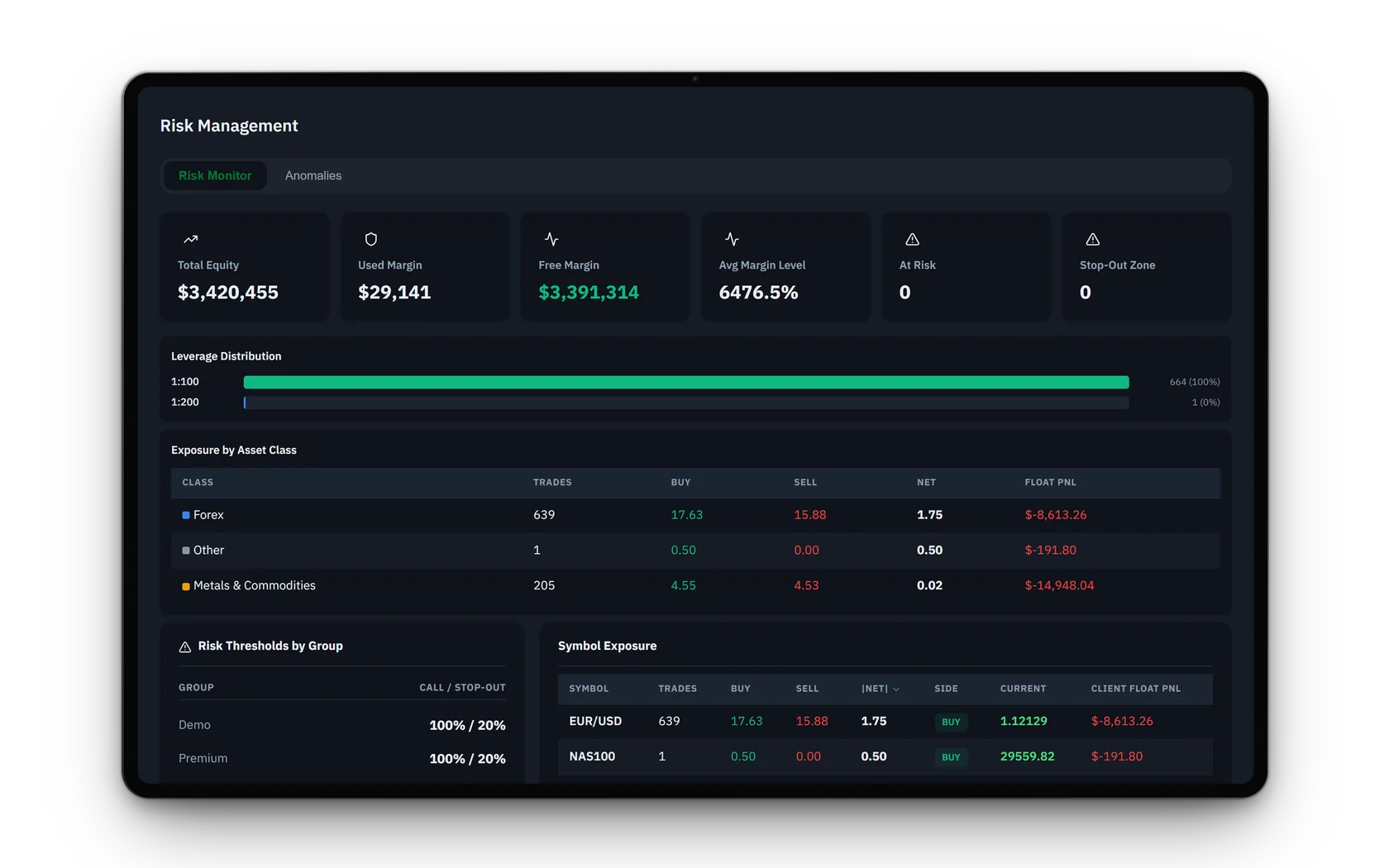
House exposure hourly, anomaly scan nightly, each figure with a dated source.
Every run gets a number and an audit line, failed runs included.
A call with an engineer about the systems you run.
What we build, how it is tested, and the price.
Built in a test environment before it touches live clients.
Deployed with the documentation and runbooks your team needs.
No. Jobs prepare reconciliations, snapshots and rates. Closing a period is done by a person on your finance team.
No. They run hourly, nightly, daily or as scheduled sweeps, and we label each one that way.
The failure is logged against its run number. Jobs that support retries, such as webhook deliveries, try again with backoff.